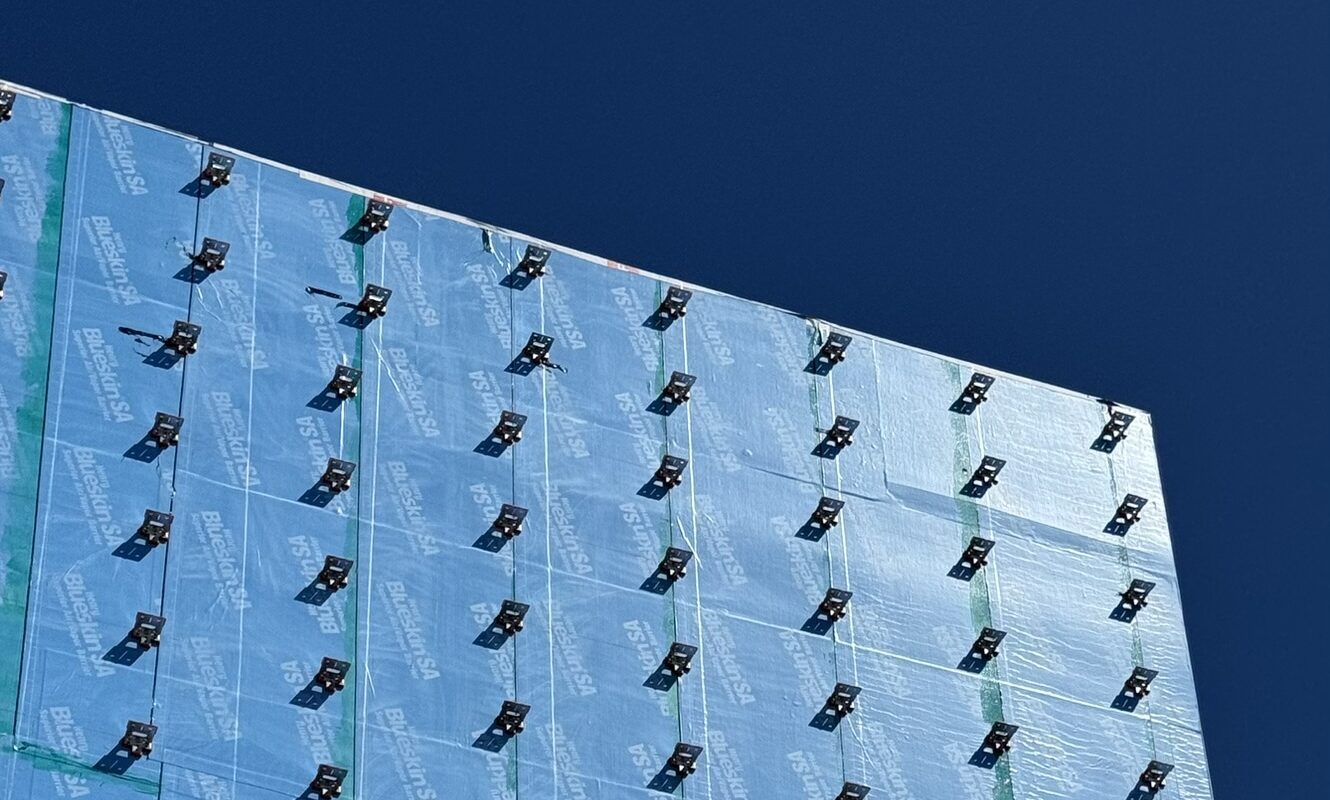

The clip that breaks
the thermal bridge.
Engineered rainscreen attachment clip — minimum 97% thermal bridge reduction, building-code compliant, installed at scale across Canadian envelopes.
Engineered rainscreen attachment clip — minimum 97% thermal bridge reduction, building-code compliant, installed at scale across Canadian envelopes.
Conventional rainscreen sub-frames create a continuous thermal bridge through the insulation layer that can erode effective R-value by 30 to 60 percent. The TAC Thermal Spacer is an engineered clip that solves it — distributed across Canada by Exterior Technologies Group.
Every rainscreen wall has the same fundamental problem. Insulation goes outboard of the air and water barrier to keep the structure warm and dry — but the cladding has to attach to something, and whatever passes through that insulation conducts heat out of the building. Steel Z-girts and hat channels are the worst offenders: they short-circuit the entire continuous insulation layer and can degrade effective wall R-value by 30 to 60 percent.
The TAC Thermal Spacer eliminates that conduction path. It's a discrete clip — installed at engineered spacing across the wall — that supports the cladding sub-frame while interrupting the metal-to-metal heat transfer with a high-performance thermal pad. The clip's geometry and pad material together deliver a minimum 97% reduction in thermal bridging compared with a continuous metal sub-frame at the same spacing.
The current production spec is the TAC 2.1 Thermal Assembly Clip: a cold-formed A653 CS Type-B G90, 14-gauge galvanized steel clip with slotted HDPE thermal pads. It installs with two screws per clip, accommodates up to 1/2" of built-in adjustability without third-party shims, and is compatible with steel studs, cast-in-place concrete, and CMU substrates. The clip has been verified through thermal assembly analysis and structural testing for the wind loads required by Canadian codes.
ETG supplies TAC across Canada along with project-specific spacing recommendations, CSC three-part specifications, standard design details, and component drawings. The clip is already installed at scale in Canadian civic and institutional projects — including the Pan Am Aquatics Centre in Toronto — and is the most cost-effective way for a design team to meet ASHRAE 90.1, NECB, and SB-10 effective R-value targets without redesigning the rainscreen.
Verified minimum 97% reduction in thermal bridging through the cladding sub-frame layer — across all three TAC configurations.
Meets effective R-value targets under ASHRAE 90.1, NECB, and SB-10. Thermal analysis available on request for project-specific assemblies.
Each TAC 2.1 clip installs with two screws and 1/2" built-in adjustability — no shims, no special tools, fast field placement.
Compatible with steel studs, cast-in-place concrete, and CMU. Substrate-specific fastener selection guidelines provided.
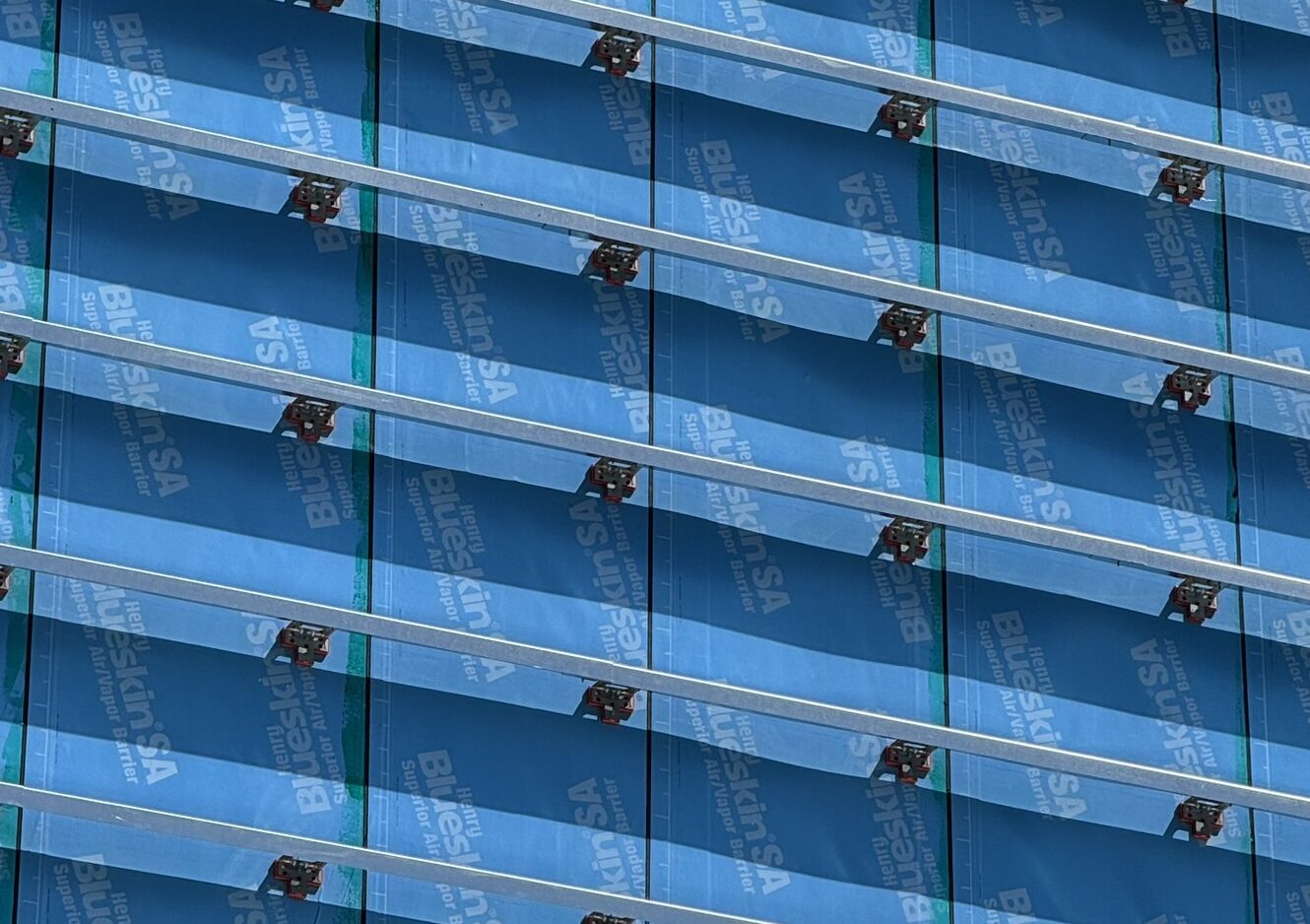
The TAC family covers the full range of rainscreen cladding weights — from light metal panel through terracotta and stone veneer. Each configuration delivers the same minimum 97% thermal break with structural capacity scaled to the cladding load.
100% pultruded glass-fibre and thermoset polyester resin composite clip. Engineered for typical metal panel and lightweight rainscreen cladding loads. The lightest, lowest-conductivity option in the TAC range — ideal where every fraction of effective R-value matters.
Galvanized steel structural clip with engineered thermal pad isolation. Increased load capacity for heavier rainscreen claddings — terracotta panels, fibre-cement systems, and stone veneer. Retains the 97% thermal break performance of the fibreglass clip at higher load capacity.
Current production spec. Cold-formed A653 CS Type-B G90, 14-gauge galvanized steel clip with slotted HDPE thermal pads. Two-screw install, 1/2" built-in adjustability without shims, and verified through thermal and structural testing for steel-stud, cast-in-concrete, and CMU substrates.
Three-part CSC NMS format specification for the current TAC 2.1 Thermal Assembly Clip — sub-framing thermal spacers, fasteners, and cladding support sub-framing.
Verified thermal assembly analysis and structural test documentation for code compliance reviews — ASHRAE 90.1, NECB, and SB-10 alignment.
Component drawings, standard design details, and Revit family files for TAC 2.1 — available on request along with project-specific spacing recommendations.
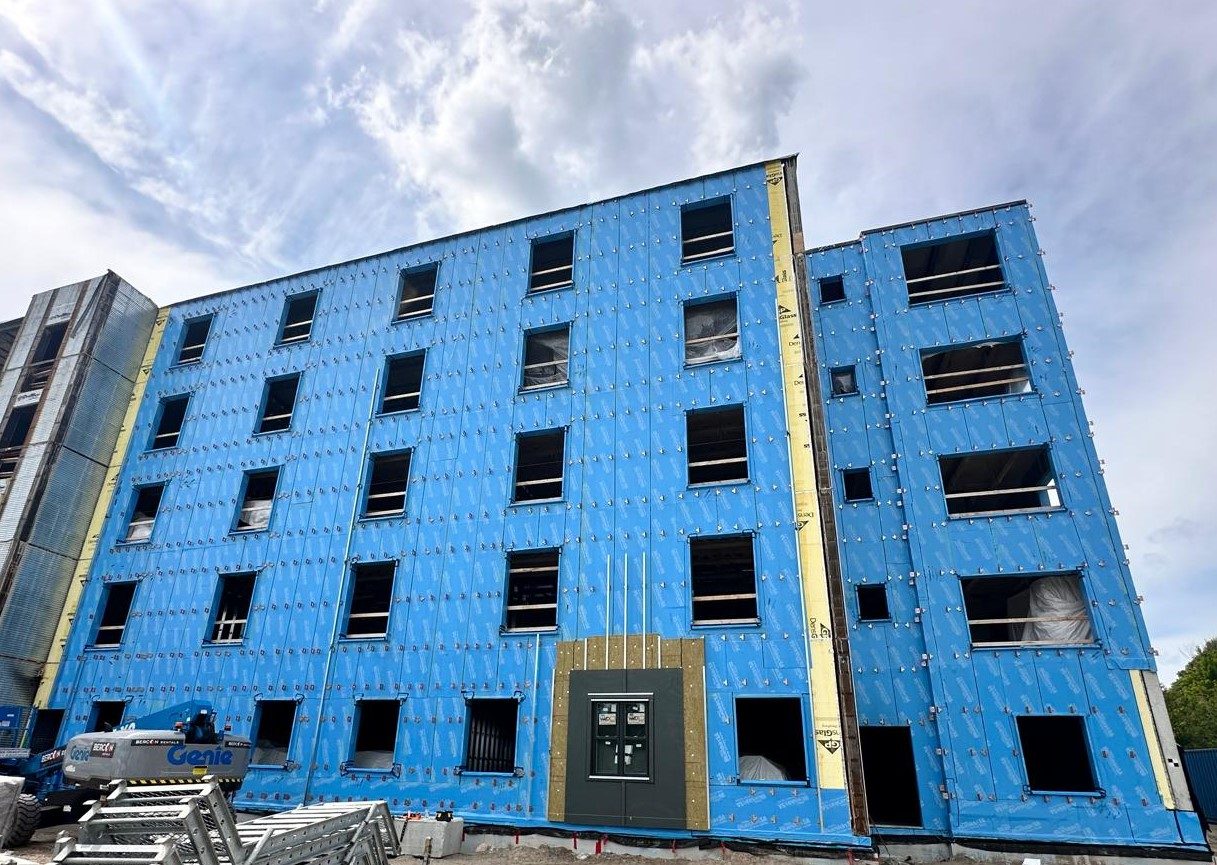
Selected TAC Thermal Spacer installations across Canadian envelopes — from multi-residential rainscreen walls to high-volume civic and institutional projects where effective R-value targets drove the specification.
If your rainscreen assembly is losing R-value to a continuous metal sub-frame, the TAC 2.1 clip recovers it — without redesigning the wall. Our team supports the specification from thermal-analysis review through clip-spacing layout, shop drawings, and on-site coordination across Canada.